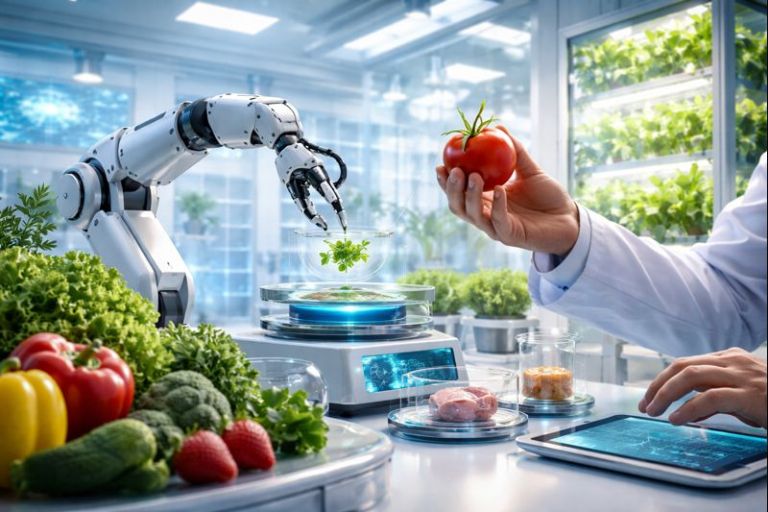
In recent years, the demand for food technology courses in India has seen a notable surge among students and professionals alike. This rise is not just a trend, it reflects deep structural changes in the food processing industry, consumer behavior, government policy and career opportunities. In this blog, we explore why this demand is growing rapidly and what it means for India’s future.
1. Rapid Growth of the Food Processing Sector
One of the main drivers behind the rising interest in food technology education is the growth of India’s food processing industry. According to industry reports, the sector contributes around 7.7% to the country’s manufacturing GVA (Gross Value Added) and provides employment to over 7 million people.
Scope of Food processing in India is evolving into a major economic engine, not just a support activity to agriculture. As the industry expands, it needs trained professionals who understand product development, quality control, packaging technology and food safety standards, all core components of food technology curricula.
2. Adding request Size and Consumer Demand
Indian consumers are changing the way they eat. With rising inflows and busy cultures, demand for packaged, ready ‑ to ‑ eat, fortified and accessible foods has surged. This shift has expanded requests dramatically. For illustration, the food service request in India is anticipated to cross ₹11 lakh crore by 2030, also, the food processing diligence itself is projected to reach ₹44–45 lakh crore (approximately) by the fiscal time 2026, driven by factors similar as import growth and diversification into organic and factory ‑ grounded foods.
Similar rapid-fire growth demands professionals who can introduce and manage complex food systems from raw material processing to distribution.
3. Government enterprise & Policy Support
Another important factor boosting the fashion ability of food technology courses is government support for the food processing sector. Schemes like Pradhan Mantri Kisan SAMPADA Yojana, Mega Food Parks and the PLI (product Linked incitement) Scheme are encouraging investment in food processing.
These enterprises help make structure, increase value addition, reduce food loss and enhance the quality of reused foods. They also produce demand for trained technologists in areas like quality assurance, compliance, food safety, force chain operation and product development,places that are central to food technology education.
4. deficit of Skilled Professionals
Despite India being one of the world’s largest food directors, there has historically been a deficit of technically professed workers in the food sector. Experts note that with adding global competition, companies need professionals who can handle ultramodern food processing ways, safety protocols and new product phrasings.
Food technology course after 12thconcentrates on subjects similar as food chemistry, microbiology, packaging engineering, food safety laws and processing technologies equipping scholars with practical and scientific knowledge that aligns with requirements.
5. Different Career openings & Global Scope
A degree in food technology opens doors to a wide range of career options. Graduates can work in food manufacturing companies, exploration labs, quality assurance units, nonsupervisory bodies like FSSAI, import houses, R&D departments, cold chain logistics and indeed entrepreneurship.
As global demand for safe and nutritional food grows, the compass for Indian food technologists isn’t limited to domestic requests, transnational career openings are also expanding. Countries with advanced food diligence laboriously retain trained professionals for food safety, product invention and specialized consulting places.
6. Rising mindfulness About Nutrition, Safety & Sustainability
Moment’s consumers are more health ‑ conscious than ever. There’s increased mindfulness about food safety, hygiene, nutritive value and sustainability. Food technologists play a crucial part in icing that products meet safety norms and nutritive marks, whether it’s extending shelf life through better packaging or developing fortified and functional foods.
This growing mindfulness adds to the appeal of food technology courses, as scholars see direct societal applicability in their careers.
Conclusion A Growing Field with Long ‑ Term Implicit
In conclusion, the rising demand for food technology courses in India is the result of multiple, supporting forces a booming food processing, indicative government programs, changing consumer preferences, career diversity and the critical need for professionals.
As India’s food sector continues to expand and embrace innovation, students and young professionals are increasingly opting for Food Technology admission 2026 as a stable and future-oriented career choice. With reputed Food Technology colleges near me offering industry-relevant programs and strong job opportunities after Food Technology course, this field is emerging as a promising option for long-term growth.
For those interested in combining wisdom and societal impact, this field offers both occasion and purpose, making it one of the most dynamic courses to pursue in India moment.