
MESSAGE FROM THE HEAD OF THE DEPARTMENT
It is a privilege to lead the Department of Medical-Surgical Nursing at People’s College of Nursing, Bhopal. Our department is dedicated to nurturing skilled, compassionate, and responsible nursing professionals who can meet the evolving demands of modern healthcare.
Medical-Surgical Nursing is the foundation of clinical nursing practice. We focus on developing strong clinical competence, critical thinking, and evidence-based practice among our students. Through well-structured academic programs, advanced simulation, and diverse clinical exposure, we ensure holistic professional development.
Our faculty members are committed to excellence in teaching, research, and patient care, creating an environment that fosters learning, innovation, and ethical practice. We strive to prepare our students to deliver safe, quality, and patient-centered care in various healthcare settings.
Asso. Prof. Shailendra Singh Rajpoot
Head of the Department
Medical-Surgical Nursing
DEPARTMENTAL MEMBERS
| S.No. | Name of Faculty | Designation |
| 1. | Mr. Shailendra Rajpoot , Asso.prof. | HOD |
| 2. | Ms. Kiran Yadav | Assistant Professor |
| 3. | Ms. Arpita Innocent | Assistant Professor |
| 4. | Mr. Rohit Yadav | Assistant Professor |
| 5. | Ms. Priya Rathore | Tutor |
| 6. | Mr. Shivam Karade | Tutor |
| 7. | Ms. Ritu | Tutor |
| 8. | Ms. Yashasvi | Tutor |
STANDARD OPERATIONG PROCEDURES
INDEX
- Introduction
- The vision of the Department of Adult Health Nursing
- The mission of the Department of Adult Health Nursing
- Lab Objectives
- Lab layout
- Purpose of Policy & Procedures
- Job description of members
- Lab conduct/behavior
- Equipment use policies
- Lab safety policy
- Maintaining cleanliness
- References
INTRODUCTION
Medical Surgical nursing is a specialized field within nursing that focuses on the care of adult patients with medical or surgical conditions. It is a dynamic and challenging area of nursing that requires a broad knowledge base, critical thinking skills, and the ability to provide holistic care to individuals facing a wide range of health challenges. Department of Medical Surgical Nursing lab which is now converted to Department of Adult Health Nursing as per New Revised B.Sc Nursing Syllabus( 20-21) was established in 2006 with the intake of 100 Students of B.Sc Nursing
VISION
We envision the advance skill lab as a dynamic and innovative center of excellence within our university, dedicated to shaping the next generation of highly skilled and compassionate healthcare professionals. Our vision is rooted in the principles of transformative education, cutting-edge simulation, and a commitment to the highest standards of patient-centered care
MISSION
The mission of advance skill lab is to provide a structured and supportive learning environment where nursing students can integrate theoretical knowledge with hands-on clinical skills. The lab aims to prepare students for the challenges and complexities of Adult Health nursing by focusing on several key components like Clinical competence, Skill Mastery, Patient Centered care , continuous learning and reflection.
1. Clinical Skills Development:
-Develop and enhance basic clinical nursing skills, such as patient assessment, vital sign measurement, and physical examination techniques.
-Practice and improve proficiency in various nursing procedures and techniques commonly used in Adult Health settings.
2. Critical Thinking and Decision Making:
-Foster critical thinking skills by engaging students in realistic patient care scenarios.
-Encourage students to make clinical judgments, prioritize care, and implement appropriate nursing interventions.
3. Patient Safety and Infection Control:
-Emphasize the importance of patient safety and infection control measures.
-Instruct students on proper techniques for maintaining a sterile environment and preventing healthcare-associated infections
4. Medication Administration
-Train students in safe and accurate medication administration.
-Provide opportunities for students to practice dosage calculations and understand medication interactions.
5. Technology Integration
-Familiarize students with the use of technology in nursing practice, such as electronic health records, medical devices, and other healthcare technologies.
6. Professionalism and Reflective Practice:
-Foster a sense of professionalism in nursing practice.
-Encourage self-reflection and continuous improvement by providing opportunities for students to review and analyze their own performance.
LAB LAYOUT
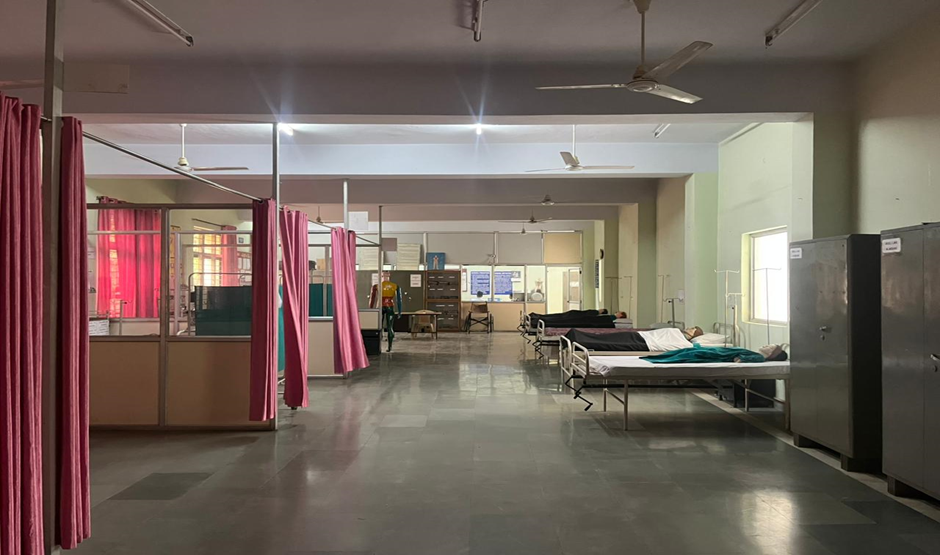
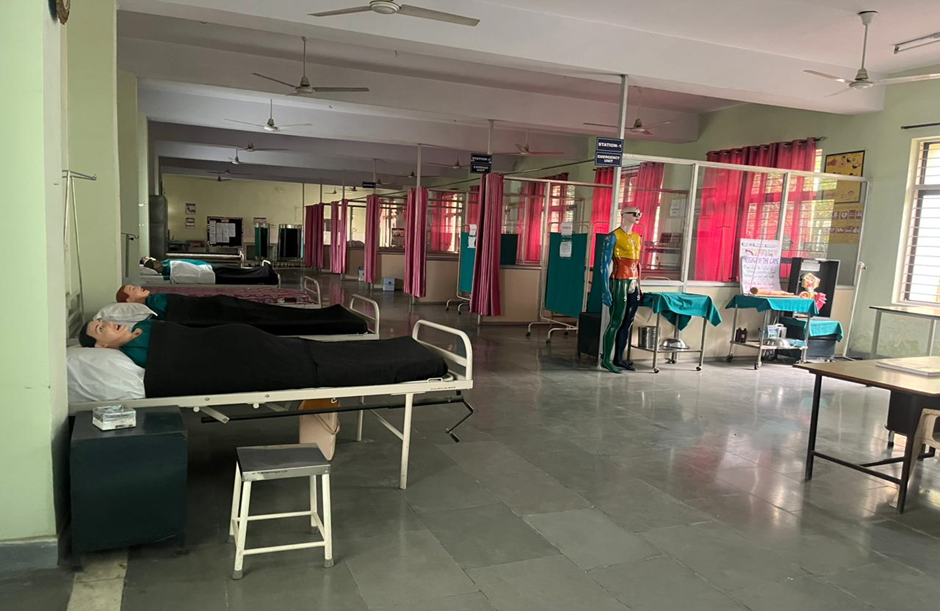
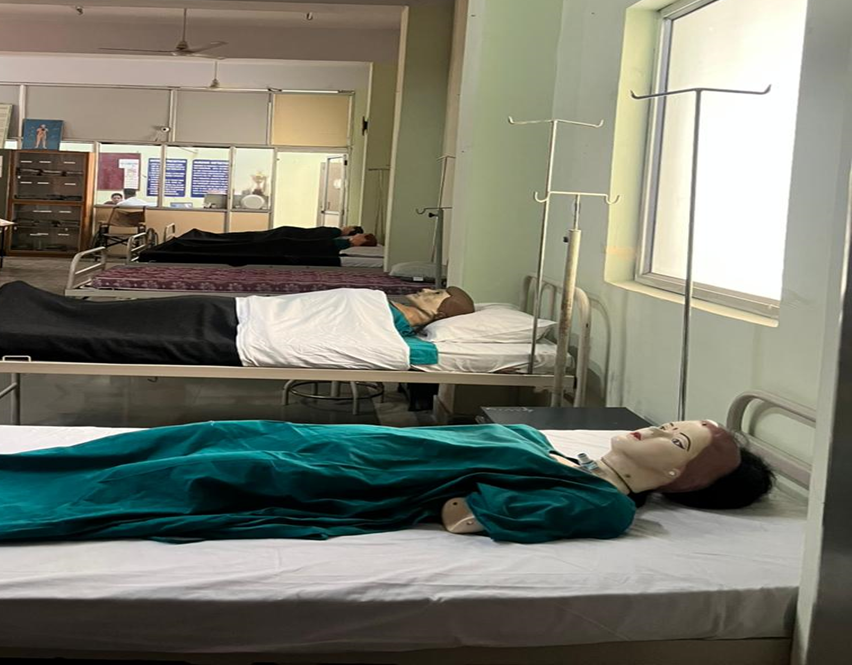
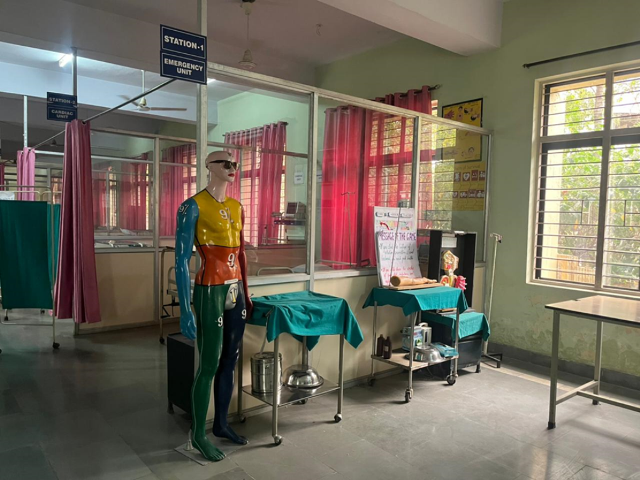
The layout of advance skill lab is carefully designed to create a realistic and conducive environment for nursing students to develop their clinical skills and knowledge.
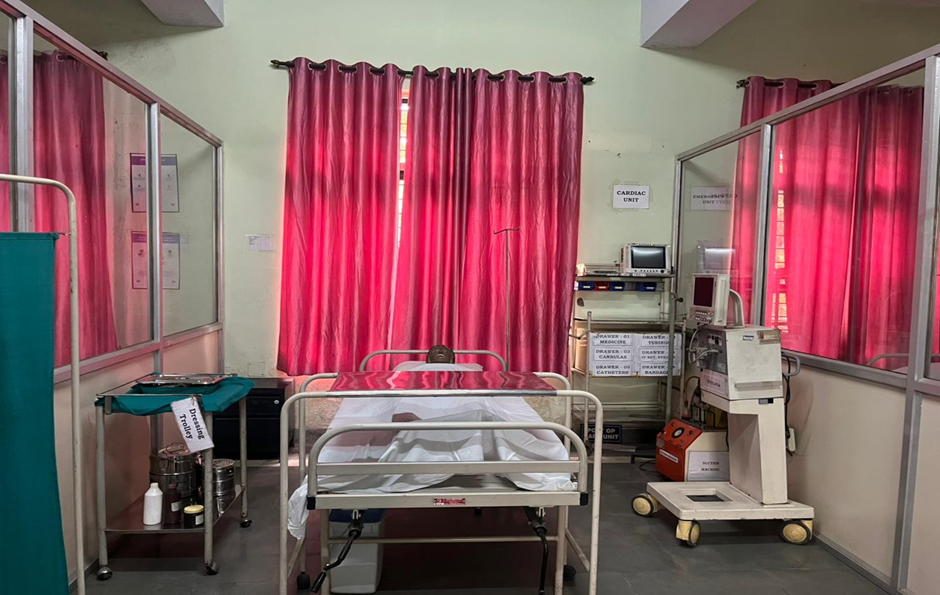
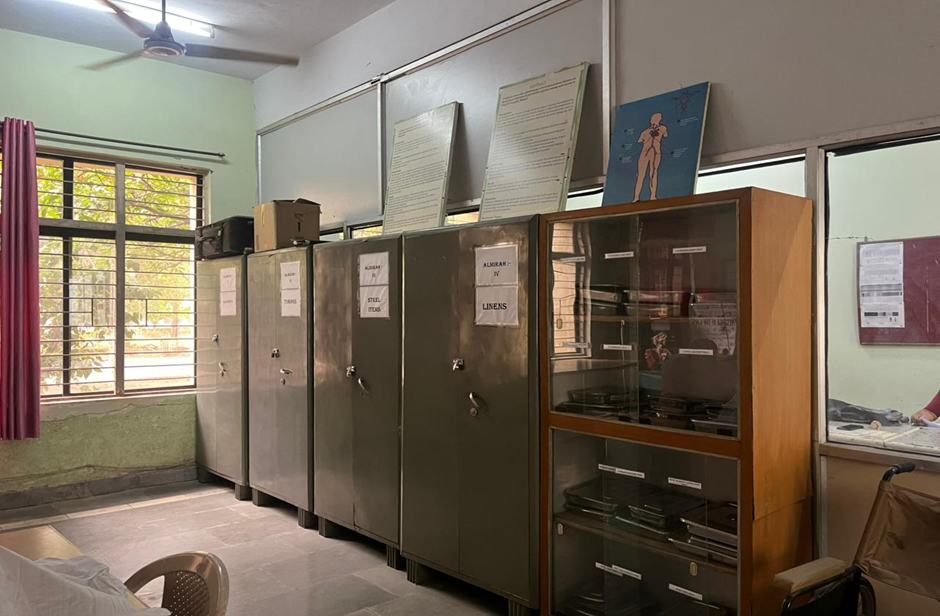
Lab is equipped with skill stations including Trauma Unit, Gastro Intestinal Unit, Respiratory Unit ,Debriefing area ,Equipment Storage, Manikins and Task Trainers,Utility Areas, Class room Space .
PURPOSE OF POLICIES AND PROCEDURES
The policies and procedures of advance skill lab serve several important purposes, all aimed at ensuring the effective and safe functioning of the lab and promoting optimal learning outcomes for nursing students
- Policies and procedures establish standardized practices within the advance skill lab. This ensures consistency in teaching methods, assessment criteria, and safety protocols, providing a uniform learning experience for all students.
- Policies and procedures help the advance skill lab comply with local, state, and national regulations and standards for nursing education. This includes adherence to accreditation requirements and guidelines set by relevant professional organization
- By clearly defining procedures and protocols, policies help in identifying and mitigating potential risks. This contributes to effective risk management and ensures a safe learning environment for both students and faculty.
- Policies address issues related to patient simulation, confidentiality, and ethical considerations. This is particularly important in advance skill labs where students engage in simulated patient care scenarios.
- Policies guide the efficient use of resources within the advance skill lab, including equipment, facilities, and faculty time. This ensures that resources are allocated effectively to support the learning objectives of the program.
- Policies outline expectations for student conduct, professionalism, and academic integrity. This promotes accountability and sets clear consequences for any breaches of conduct, ensuring a respectful and ethical learning environment.
- Policies and procedures serve as a means of communication between faculty, staff, and students. They provide a reference point for understanding the rules and expectations within the advance skill lab, fostering effective communication and collaboration.
- Regular review and update of policies and procedures allow the advance skill lab to adapt to changes in healthcare education, technology, and best practices. This supports a culture of continuous improvement and innovation.
A. JOB DESCRIPTION OF FACULTIES
- Orient the students in the lab.
- Updating lab policies and procedures as needed.
- Monitoring procedures performed by the students.
- Supports students who require additional assistance with learning advanced lab skill.
- Ensure the maintenance of equipment by maintaining the lab inventory register.
- Determining the inventory needs of the lab.
- Preparing and ordering supplies as needed.
- Recommending general cleaning in the lab.
- Maintain lab lending & lab utilization registers.
- Maintain lab with safety regulations.
- Doors must be locked when the lab is not in use.
- Students attendance should be maintained in activity register with signature &date of student
- Faculty who is doing demonstration enter topics in activity register with date & sign
B. JOB DESCRIPTION OF STUDENTS
- Return the equipment used for lab practice.
- When practicing with scenarios, approach situations as if they are actual patient interactions.
- Maintain cleanliness of the area where they are practicing.
- Display professional conduct.
- Share the opportunity to practice.
- Report damage or malfunction of the lab equipment.
- Inform the concerned faculty of any particular learning needs.
- No students are to be in the lab without the Lab faculty.
LAB CONDUCT /BEHAVIOUR
- All Students should participate in a lab orientation conducted by Faculties.
- Students should review procedures and scenarios prior to the lab session.
- Follow lab hours strictly as mentioned in the timetable.
- Students need to fill out their logbook as part of the completion of the
- No cell phones are allowed in the lab.
- No food or drink is allowed in the lab.
- No equipment or supplies can be taken out of the lab without permission.
- Any equipment or furniture used should be returned clean, in proper form and in proper place ready for the next use.
- Replace the equipment and chairs when leaving the area.
- Always sign in and out of the lab for both practice and presentation
A. Inventory Policy
- The lab in charge faculty should maintain an inventory register on monthly basis
- In charge faculty will update the list of equipment needed for the Lab each year and provide the list to HOD& Submit to the College Principal/Dean.
- The College Principal/Dean is responsible for the initiation of all equipment purchase orders.
- Final purchase decisions are made by the management
- The lab in charge faculty is responsible for receiving, and inspecting the equipment into the list of inventories.
- Monthly inventory should be checked &enter in to the inventory register.
B. Utilization Policy
- A lab utilization register should be followed by the lab.
- It should be clearly mentioned the date, time and purpose of using the lab in the register.
C. Lending Policy
- The College of Nursing reserves the right to add equipment that is considered for curriculum goals and objectives.
- The College of Nursing will take up authority to dispose of equipment believed in appropriate for addition to the Lab.
- All lending educational materials and equipment from the lab to the other lab for practical exam purpose or practice purpose should be documented in the lending register and make sure the same returned in proper condition.
LAB SAFETY POLICY
- All faculty, staff, and students must know and practice the safety guidelines while using the lab.
- Failure to obey to guidelines can result in disciplinary action.
- This manual will be available in the lab and students will be instructed to review the contents during the orientation time itself.
- Lab shall locked unless occupied by faculty or students during class or practice.
- Students are expected to come to lab prepared by having read the scheduled lab objectives prior to the start of the lab period.
- Students should be well-informed of the care, handling, and proper use of equipment prior to using it in the laboratory.
- Students should report recent injuries, illnesses, or communicable diseases to the faculties as soon as possible so that necessary precautions may be taken.
- Faculty and students are responsible for reporting any problems encountered with electrical equipment such as any frayed electrical cords, cracked plugs, missing outlet covers, etc.
- Each faculty member will be responsible forhis/ her own and as well as student’s
MAINTAINING CLEANLINESS
- The Lab in charge faculty will be responsible for the maintenance of equipment and monitoring of the labs at all times.
- The Lab in charge faculty may delegate this task but will be responsible for the overall performance of these duties.
- Students and faculty are responsible for the cleanliness of the lab during and after use.
- Floors and furniture will be cleaned by appropriate personnel at the end of each week.
- Equipment located in the lab will be cleaned and more often as necessary with the appropriate cleaning agent.
- Lights should be turned off and doors locked when leaving.
- Students are not to be left in the labs unattended.
- Students and faculty are responsible for any broken, missing or unclean equipment
DISCARD POLICY :
- Any article/item damaged must be reported to Lab In charge
- Lab In Charge will be responsible to check and confirm the damage.
- He/She must report to Principal in writing for the same before discarding
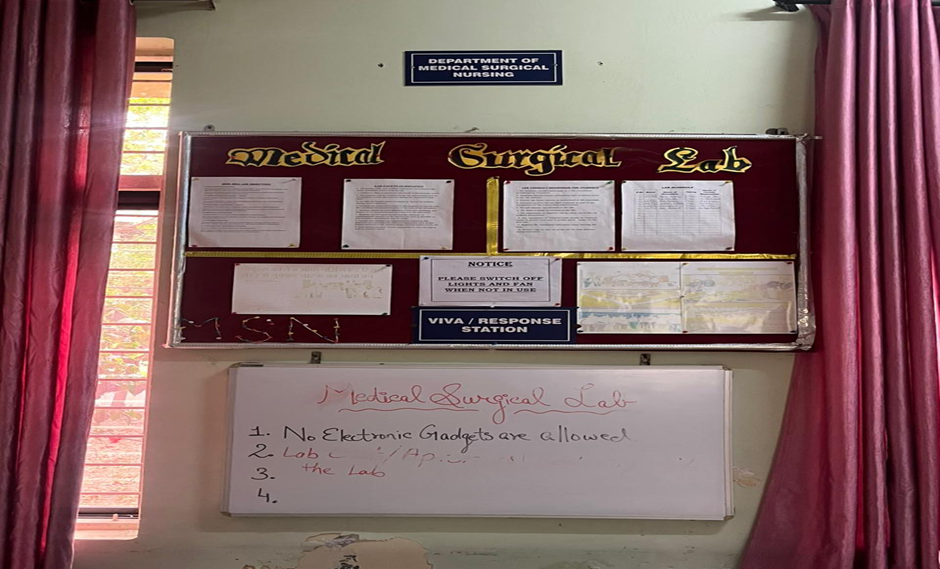
Advanced Nursing Skill Lab-Infrastructure
LIST OF DEPARTMENTAL DAY CELEBRATION (ANNUAL)
| S.No. | Event Name | Day Celebration |
| 1. | World Cancer Day | 4th February |
| 2. | World Hypertension Day | 17th May |
| 3. | World Organ Donation Day | 13th August |
| 4. | World Patient Safety Day | 17th September |
| 5. | World Heart Day | 29th September |
| 6. | World Diabetes Day | 14th November |