
Laboratories
State-of-the-Art Laboratories
“Hands-on learning through advanced computing infrastructure and real-world project development.”
Our laboratories empower students to transform electrical engineering concepts into practical innovations that power industries and modern society



AC Machines Laboratory


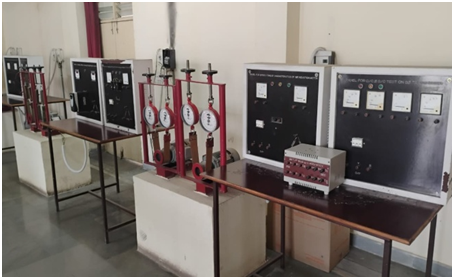
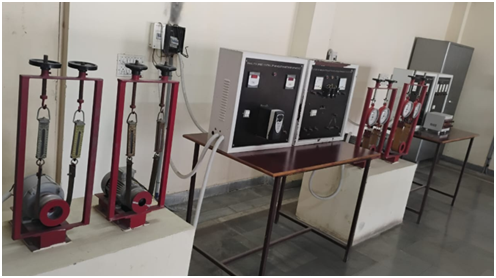
The AC Machines Laboratory provides hands-on experience with alternating current machines and their practical applications in power systems and industries.
Key Experiments & Learning
- Performance analysis of synchronous and induction machines
- Study of three-phase induction motor characteristics
- Speed control of AC motors
- Alternator performance and voltage regulation
- Load testing of electrical machines
Facilities & Equipment
- Three-phase induction motors
- Synchronous motors and alternators
- Power analyzers and tachometers
- AC motor control panels
Student Learning Outcome
Students understand the operation, efficiency, and control of AC machines used in power plants and industries.
DC Machines Laboratory

About the Lab
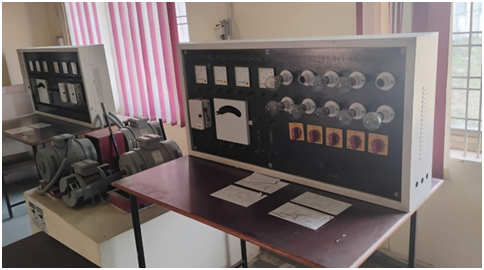
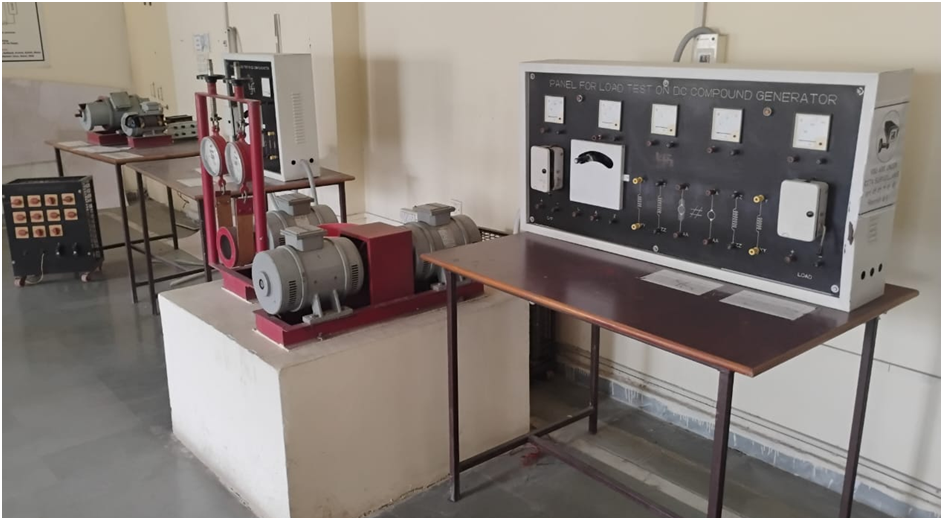
This laboratory helps students understand the working principles, performance, and applications of DC machines used in industrial drives and control systems.
Key Experiments
- Open circuit and load characteristics of DC generators
- Speed control of DC motors
- Efficiency testing of DC machines
- Load testing of DC shunt and compound motors
Equipment Available
- DC motors and generators
- Power supply units
- Speed control panels
- Digital measuring instruments
Student Learning Outcome
Students gain practical knowledge of motor control techniques and machine performance analysis.
Power Systems Laboratory
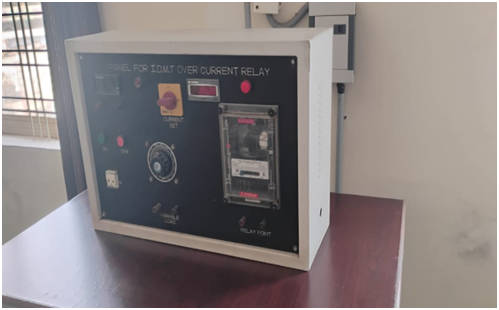
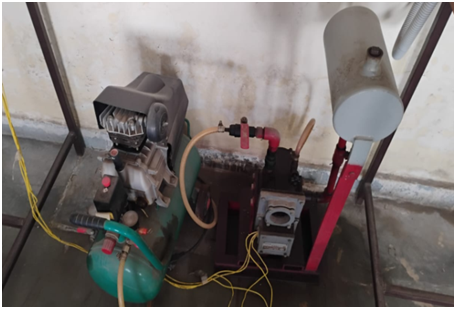
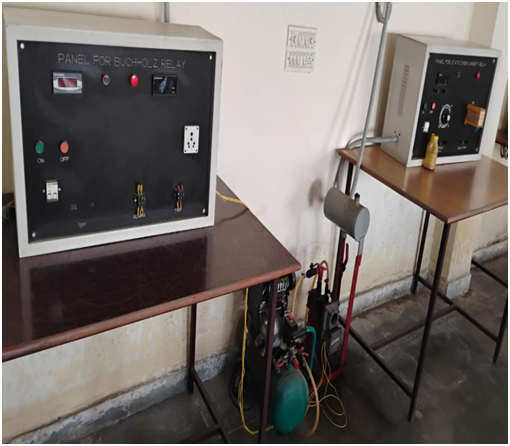
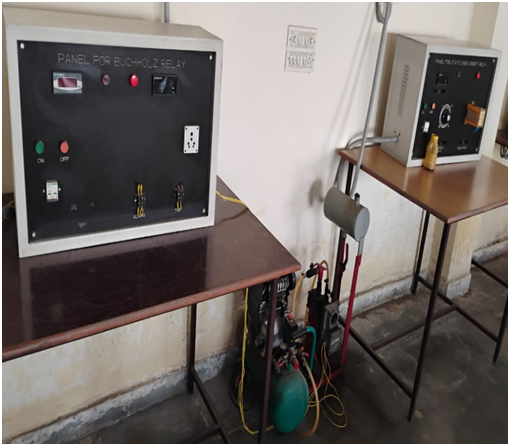
The Power Systems Lab focuses on the study of electrical power generation, transmission, distribution, and protection systems.
Key Learning Areas
- Transmission line modelling
- Power factor correction
- Relay protection systems
- Power system fault analysis
Facilities
- Power system simulation kits
- Protective relays
- Transmission line models
- Load flow analysis software
Student Learning Outcome
Students develop an understanding of modern power network operation and system protection techniques.
Simulation Laboratory
The Simulation Lab enables students to design and analyze electrical systems using advanced software tools.
Activities
- Power system modelling
- Electrical circuit simulation
- Renewable energy system analysis
- Smart grid simulations
Student Learning Outcome
Students learn to simulate complex electrical systems before real-world implementation.
Instrumentation Laboratory
The Instrumentation Lab provides practical knowledge of sensors, measurement systems, and monitoring devices used in electrical and industrial systems.
Experiments Conducted
- Measurement of voltage, current, power, and energy
- Calibration of electrical instruments
- Sensor and transducer studies
- Data acquisition systems
Equipment
- Digital multimeters
- Oscilloscopes
- Sensors and transducers
- Measurement bridges
Student Learning Outcome
Students gain expertise in precise measurement and monitoring techniques used in modern industries.
Project Laboratory

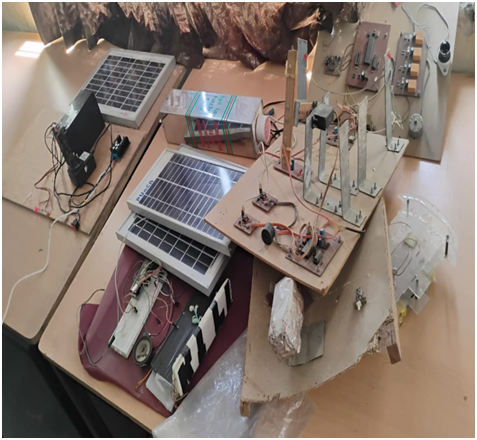
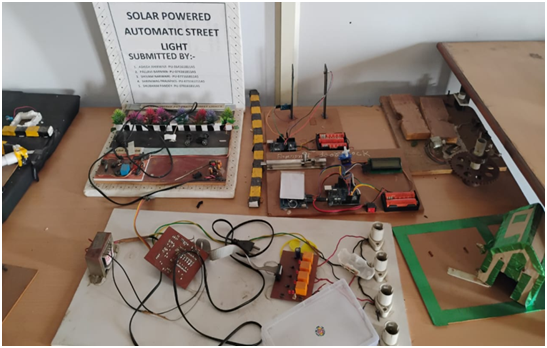

The Project Lab encourages students to design innovative solutions and develop practical electrical engineering projects.
Activities
- Final year student projects
- Renewable energy system prototypes
- Smart automation systems
- IoT-based electrical applications
Facilities
- Project development kits
- Microcontrollers and embedded systems
- Power electronics modules
- Testing and prototyping tools
Student Learning Outcome
Students develop problem-solving, innovation, and practical engineering skills through project-based learning.