
The numbers first, because they matter
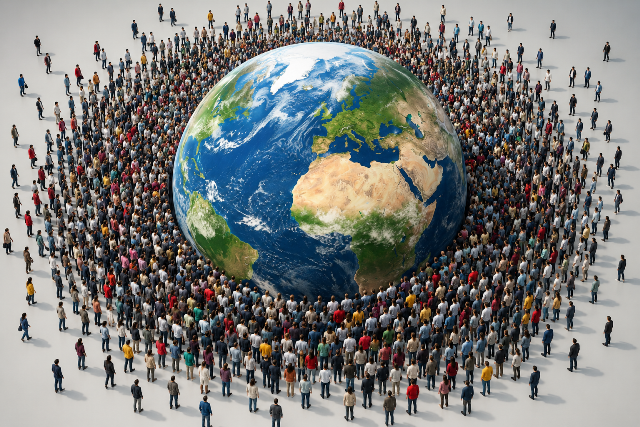
8.2 billion people on this planet right now. That number crossed 1 billion sometime around 1804. It took all of human history to get there. Then in roughly 200 years, it multiplied eight times over.
By 2050 it is expected to touch 9.7 billion. Peak somewhere around 10.4 billion in the 2080s, then slowly start pulling back.
India is now the most populous country in the world at 1.46 billion, ahead of China. That headline travels fast. What travels slower is the more interesting detail underneath it — India’s fertility rate has already fallen below 2.1, which is the level needed to simply replace the existing population. The country will keep growing until around 2062, hitting 1.7 billion, then start declining. So, the conversation about India’s population is not really about too many people anymore. It is about the kind of population — ageing or young, educated or not, urban or rural, healthy or not and what that mix means for everything from hospitals to job markets to pension systems.
World Population Day 2025 ran with the theme “Empowering young people to create the families they want in a fair and hopeful world.” Read that carefully. It is not asking governments to push people to have more or fewer children. It is asking whether people actually have the freedom to choose at all.
Why July 11
On July 11, 1987, the world’s population crossed 5 billion for the first time. People noticed. The UN marked it as Five Billion Day. Two years on, in 1989, the UN Development Programme turned it into an annual observance. By 1990, over 90 countries were participating.
The idea was simple. Once a year, pull the conversation about population — healthcare, gender equality, reproductive rights, food, water, climate — out of government meetings and into public spaces.
Thirty-five years later that idea has not aged badly.
What the 2025 Report Actually Said
Most people, when they think population, think overcrowding. UNFPA’s State of World Population 2025 report is saying something different.
Nearly 20% of reproductive age adults worldwide said they do not expect to have the number of children they want. Not because they changed their minds. Because of money, housing, job instability and not having a partner they trust. A UNFPA survey across 14 countries with over 14,000 respondents found the same pattern — people want families but the conditions around them make that harder and harder to actually do.
In Sub-Saharan Africa the fertility rate is still around 4.3 children per woman. In Europe and parts of East Asia it has dropped to 1.6, well below replacement. Governments in South Korea, Japan and parts of Europe are genuinely worried about population collapse. India’s cities are starting to see the same early signals.
One world. Completely different demographic emergencies happening simultaneously in different parts of it.
Where young people fit into this
India has roughly 600 million people under 25. The largest youth population anywhere on earth. What this group does over the next two decades — where they study, what skills they pick up, whether they find stable work, where they settle, when they start families — will determine what India looks like at its population peak in 2062 and beyond.
This is not something that plays out in policy papers. It plays out in individual decisions made by real people in real circumstances. A student choosing a career. A young couple figuring out whether they can afford a child. A family in a small town deciding whether their daughter goes to college.
Education sits right at the centre of this. Not education as a credential but education as something that actually prepares people to navigate a complicated world.
What a university should do with this
At People’s University Bhopal, the programmes built around health sciences, nursing, pharmacy and social development are not separate from this conversation. They are part of the answer to it. The nurses, pharmacists, public health workers and community development professionals coming out of these departments are going to work in the exact systems that population health depends on.
Knowing the numbers is one thing. Building the people who can respond to what those numbers mean is another.
If you are figuring out what to study and want it to mean something beyond a salary, explore programmes at People’s University built around health, people and the kind of work that actually matters at scale.
July 11 is one day. The questions it raises do not go away when the date changes.